


Back
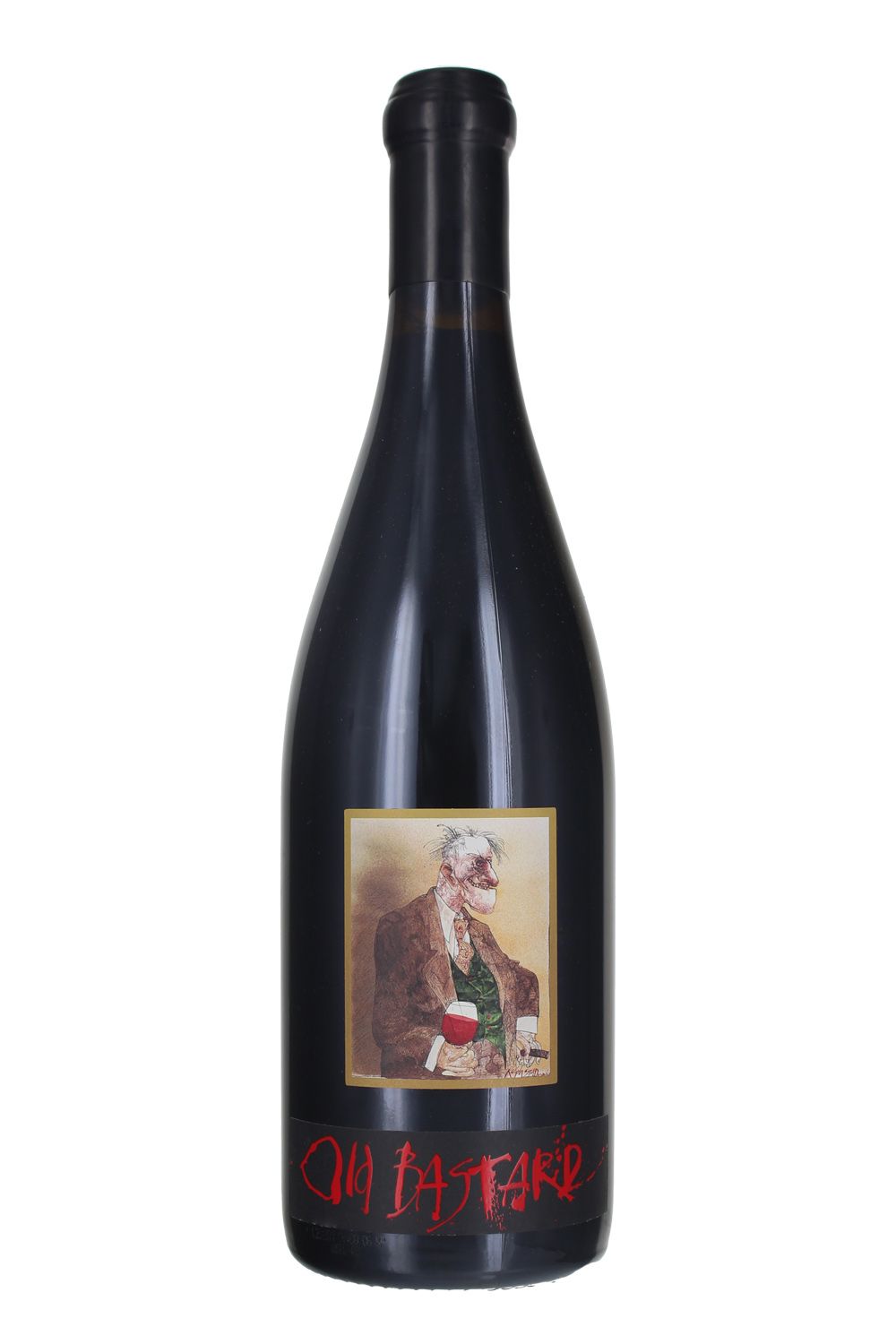
2020 Old Bastard Shiraz, Kaesler
 Add to Wishlist
No longer renowned purely for its eye-catching name (a nod to the gnarly nature of the 12 rows of free-standing, low-yielding, 1893 bush vines that are the heart of soul of the Kaesler estate), the Old Bastard has, in recent years, establis hed itself as a landmark Barossa Shiraz. As the winemaking approach at Kaesler has been fine-tuned, so this icon wine has hit even greater heights, now firmly established with a Langton’s ‘Outstanding’ classification and prized by collector s around the world. With prodigious density and power, it is something of a hedonist’s dream, but the bright acidity and layered texture means it offers more than just brute strength.

Tasting notes
Kaesler's flagship Shiraz, from gnarly old 'ancestor' vines, the 2020 vintage celebrates the 127th anniversary of these unique and rare 12 rows. The complex nose shows lifted plum, redcurrant, earthiness and a hint of charry oak in the back ground. An iron fist wrapped in a velvet glove, the 2020 is deep and brooding, from an incredibly low yielding vintage.
At a glance
producer
sub-region
region
country
grape variety
vintage
colour
abv
maturity
organic status

Reviews
From a vineyard planted in 1893, the 2020 Shiraz Old Bastard is beautiful. It's powerful yet also delivers delicious subtlety. Blackberry, dark earth and fruits of the forest aromas are well integrated with high-quality oak. A full-throttle mix of blackberry and tarry flavors show excellent balance with a firm core of tannins. The finish is seamless and will undoubtedly remain that way for some time.
Angus Hughson
South Australia
South Australia produces 49% of the annual total, although this was as high as 75% just after the second world war. Vine growing is concentrated in the south-eastern corner of the state, most near the capital of Adelaide, with the large irrigated area of Riverland towards the New South Wales border and the cooler Limestone Coast in the far south. Riverland produces 59% of the state’s grapes and is a vast vineyard area alongside the Murray River. The fruit from here is mostly processed elsewhere and generally sold under the South Australia or even South-Eastern Australia banner. The Barossa Valley is the historic centre of production, still home to 150 wineries and some iconic names. There are shiraz vines here dating back to the mid-19th century and this patrimony, along with the heat and sunshine can produce some of the richest, inkiest red wine on the planet. The Barossa is also a major centre for processing the fruit harvested from Riverland. Barossa wine is not subtle, but the best have a balance despite their richness and begin to show their class after 15 years in bottle. Nearby Clare and Eden are both somewhat cooler, at least by night, and specialise in powerful long-lived dry Rieslings and mint scented spicy shiraz. The Adelaide Hills is a relatively new region but home to some of the country’s finest chardonnay and some surprisingly elegant sauvignon blanc. The area was devastated by the 2019 bush fires with up to a third of the vineyard area burnt. The McLaren Vale to the south of the city is more maritime influenced and makes some great wines from Rhône varietals, especially old Grenache. McLaren Vale and neighbouring Langhorne Creek make a fifth of the state’s total output, much of which ends up in blends (Jacob’s Creek is sourced from here). The Limestone Coast including its sub-regions is growing in importance, as an area that is cooler and that has water bearing limestone soils. The finest of the sub-regions is Coonawarra, which although originally planted in Victorian times was extensively developed by the major companies in the 1960’s. With a climate similar to Bordeaux and a strip of red limestone soil (the famous Terra Rossa) it is today a producer of some of the country’s finest Cabernet wines alongside elegant shiraz and should be more celebrated.
![2021 Cabernet Sauvignon, Kaesler (75 cl) - Bottle [137392120211200750]](https://du5d0xxkq463h.cloudfront.net/media/catalog/product/placeholder/default/In_bond.jpeg)
![2021 The Bogan Shiraz, Kaesler (75 cl) - Bottle [100321720211200750]](https://du5d0xxkq463h.cloudfront.net/media/catalog/product/cache/e748d881e54f2c9368fad2d1a1421cc2/1/0/1003217.jpg)
![2023 Stonehorse Riesling, Kaesler (75 cl) - Bottle [273030120231200750]](https://du5d0xxkq463h.cloudfront.net/media/catalog/product/cache/e748d881e54f2c9368fad2d1a1421cc2/2/7/2730301.jpg)
![2021 Tiers Chardonnay, Tapanappa (150 cl) - Magnum [120606720210601500]](https://du5d0xxkq463h.cloudfront.net/media/catalog/product/cache/e748d881e54f2c9368fad2d1a1421cc2/1/2/1206067.jpg)