


Back
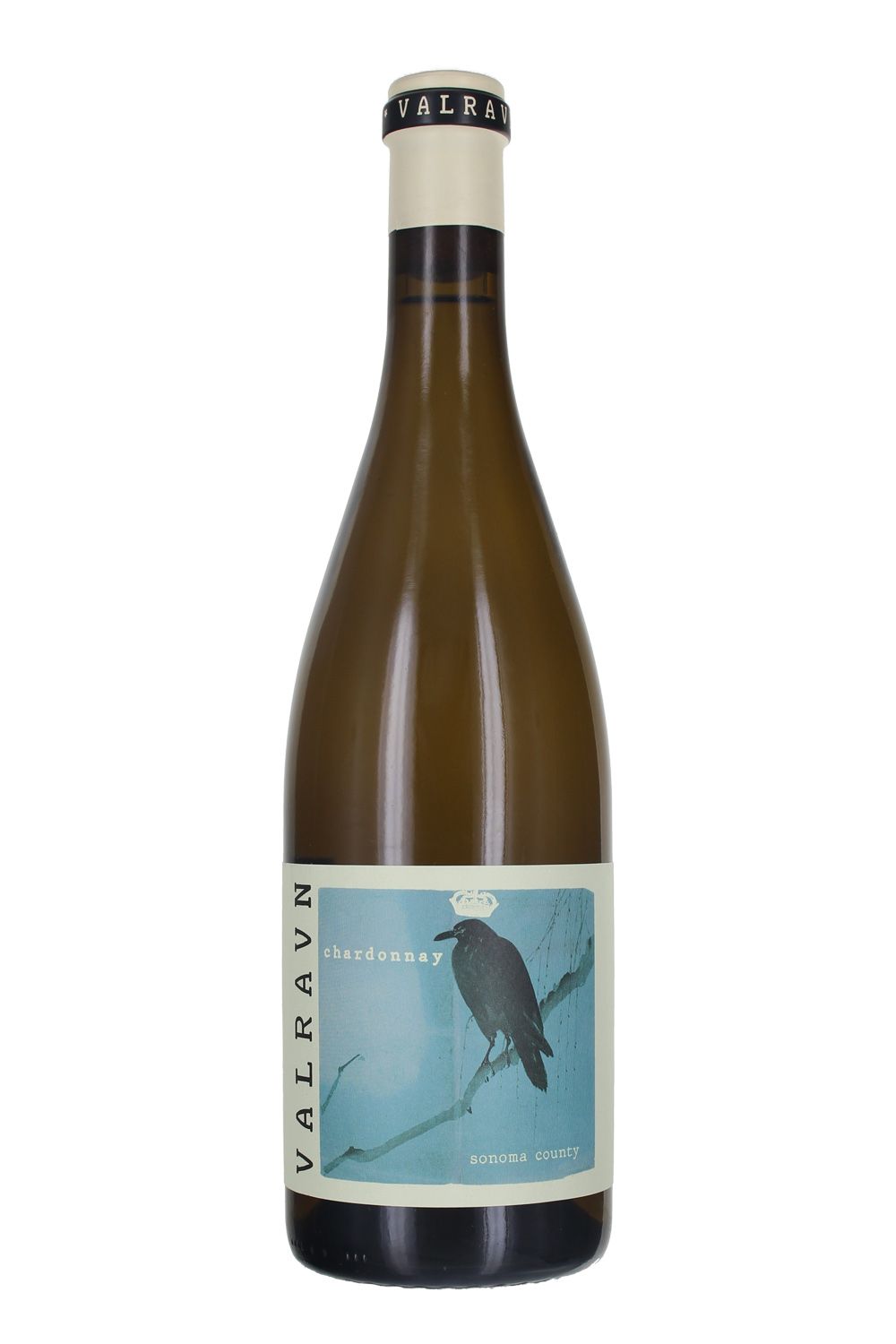
2024 Chardonnay, Valravn
 Add to Wishlist
Tasting notes
On the nose and palate, find complex flavors and aromas of crushed stone, marzipan, citrus blossom, honeysuckle, and stone fruits. The wine has excellent texture and tension with fresh vigor balanced by the lush body, ripe fruit, and persis tent finish.
At a glance
producer
sub-region
region
country
grape variety
vintage
colour
abv
maturity
organic status

Reviews
The 2024 Chardonnay (Sonoma County) is a gorgeous everyday offering from Valravn. Citrus peel, chalk, white flowers and slate lend tons of energy to match the wine's mid-weight personality. This nervy Chardonnay is a total delight.
Antonio Galloni
California
California is a state of extremes: wildfires, storms, Hollywood and its wine industry is no different. It’s easy when thinking of California to zone in quickly on Napa Valley by far the most famous region, however only 4% of California’s 3.42 billion bottles sold in 2018 were produced in Napa Valley. So where is the rest of this wine produced? Most of the wine produced in California is grown in Central valley, a large region inland from Sonoma and Napa. This is where a wine synonymous with California is produced, the sweet and pink White Zinfandel. This style of wine came about by accident when Bob Trinchero (Trinchero Family Estates) was experimenting with his much beloved Zinfandel in an attempt to make it even more robust. In 1972 Trinchero drew off some of the free-run juice and fermented it as he would a white wine producing a pale pink light bodied wine. The first production was only 220 cases, but it was in 1975 when he ramped up production after fermentation stalled leaving around more residual sugar, the extra sweetness was popular. The Sutter Home White Zinfandel grew to become to become the most popular domestic wine by 1987, and now sells between 36 million and 42 million bottles of the wine per year! The history of wine production in California is similar to many of the regions and countries of North and South America. Vines were introduced by Spanish Franciscan Missionaries in the mid-19th century, who required holy wine for communion. While other states dedicated their efforts to producing popular wine, such as New York, Virginia and Ohio, plantings across South California grew slowly before reaching North California. The Gold Rush of the mid-19th century brought huge fortune to the wine industry—thirsty work!—before the industry all but collapsed as Prohibition came into force in 1919. Some producer maintained their plantings by selling their fruit as table grapes. Recovery was slow over the following decades, until the 1960s, 70s and 80s brought a boom in not just plantings and wineries, but understanding and technological nous. The infamous blind tasting of 1976, dubbed the “Judgement of Paris” saw many California wines beat their French counterparts, showing the world that California wine was a growing force to be reckoned with. California comprises 135 AVAs—“American Viticultural Areas”—and counting. Quality wine production in concentrated in a few distinct areas: Napa Valley, Sonoma County, Mendocino County, and Central Valley. At just 30 miles long, Napa Valley produces some of the finest Cabernet Sauvignon in the world owing to its diversity of terroir and altitudes. Yountville, Mt. Veeder, Spring Mountain, Rutherford and Coombsville are the key sub-regions. Sonoma County is Pinot Noir and Chardonnay country, with pockets of vineyards lying along the coast and further inland, including Alexander Valley, Caerneros and Russian River Valley. A cooler climate, much of Mendocino County is actually forest and fruit trees, with Anderson Valley and Mendocino Ridge two notable sub-regions producing elegant, mineral-driven wines. Lodi is the main sub-region within Central Valley, and where more than 30% of Zinfandel is grown, much of which from old vines. Undoubtably California is producing a much more diverse range of wines than in the past, with new AVAs being established and many more innovative producers trying their luck in the land of opportunity.
![2024 Aries Chardonnay, Marine Layer (75 cl) - Bottle [208895220241200750]](https://du5d0xxkq463h.cloudfront.net/media/catalog/product/cache/e748d881e54f2c9368fad2d1a1421cc2/2/0/2088952.jpg)
![2011 Monte Bello, Ridge Vineyards (75 cl) - Bottle [112316420110600750]](https://du5d0xxkq463h.cloudfront.net/media/catalog/product/placeholder/default/In_bond.jpeg)
![2020 Pinot Noir, Pavette (75 cl) - Bottle [227939620201200750]](https://du5d0xxkq463h.cloudfront.net/media/catalog/product/cache/e748d881e54f2c9368fad2d1a1421cc2/2/2/2279396.jpg)
![2019 Shake Ridge Mourvedre, Newfound (75 cl) - Bottle [205994120191200750]](https://du5d0xxkq463h.cloudfront.net/media/catalog/product/cache/e748d881e54f2c9368fad2d1a1421cc2/2/0/2059941.jpg)
![2022 Pinot Noir, Alma de Cattleya (75 cl) - Bottle [187451620221200750]](https://du5d0xxkq463h.cloudfront.net/media/catalog/product/cache/e748d881e54f2c9368fad2d1a1421cc2/1/8/1874516.jpg)
![2022 Russian River Valley Pinot Noir, Emeritus Vineyards (75 cl) - Bottle [187415420221200750]](https://du5d0xxkq463h.cloudfront.net/media/catalog/product/cache/e748d881e54f2c9368fad2d1a1421cc2/1/8/1874154.jpg)
![2022 Old Vine Zinfandel, Valravn (75 cl) - Bottle [183749020221200750]](https://du5d0xxkq463h.cloudfront.net/media/catalog/product/cache/e748d881e54f2c9368fad2d1a1421cc2/1/8/1837490.jpg)
![2021 Zinfandel, Pavette (75 cl) - Bottle [292402320211200750]](https://du5d0xxkq463h.cloudfront.net/media/catalog/product/cache/e748d881e54f2c9368fad2d1a1421cc2/2/9/2924023.jpg)
![2021 Lyra Pinot Noir, Marine Layer (75 cl) - Bottle [208896520211200750]](https://du5d0xxkq463h.cloudfront.net/media/catalog/product/cache/e748d881e54f2c9368fad2d1a1421cc2/2/0/2088965.jpg)
![2022 Valravn Pinot Noir, Sonoma County (75 cl) - Bottle [214518520221200750]](https://du5d0xxkq463h.cloudfront.net/media/catalog/product/cache/e748d881e54f2c9368fad2d1a1421cc2/2/1/2145185.jpg)