


Back
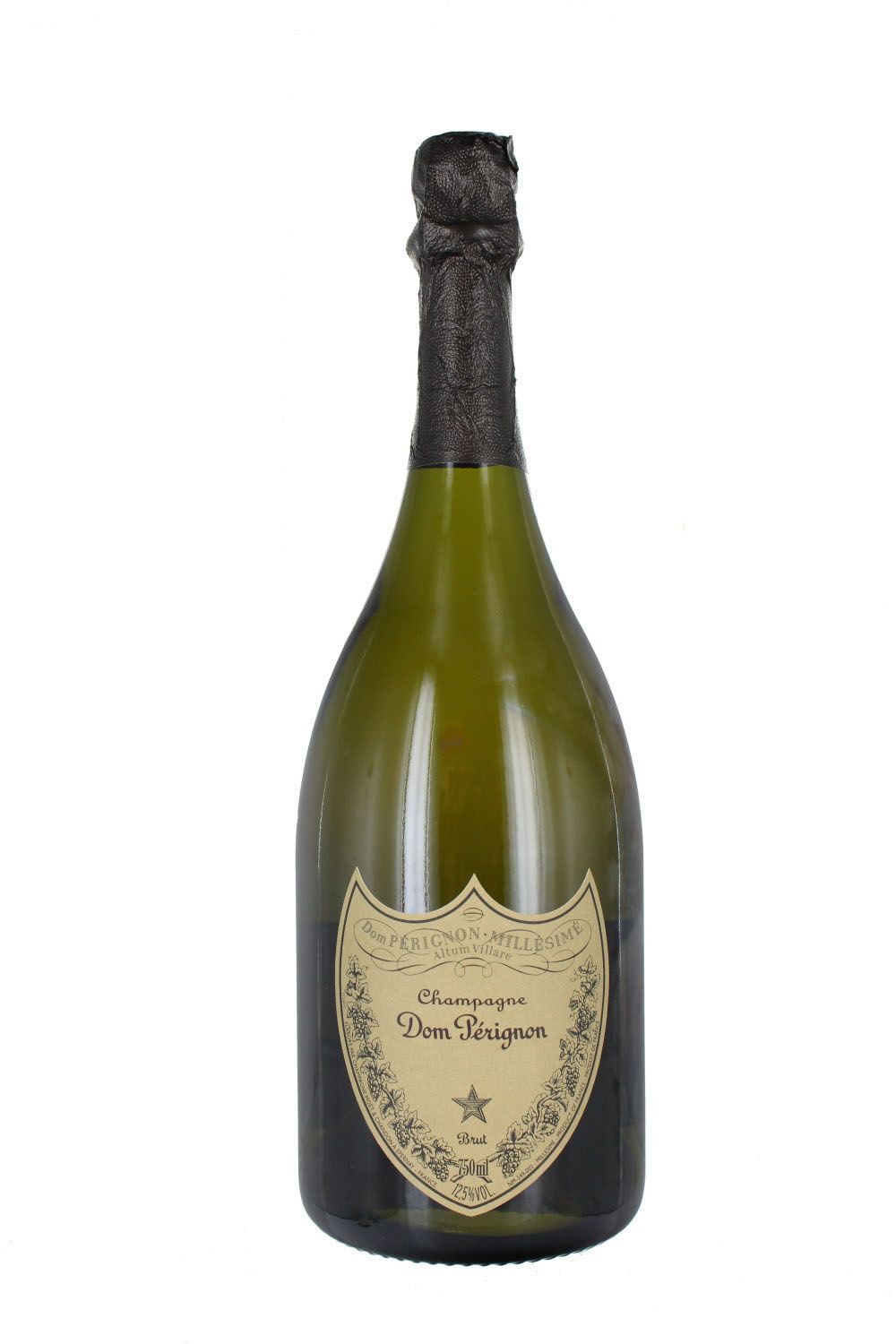
2008 Champagne Dom Perignon
 Add to Wishlist
£240.00 1 x Bottle (75 cl)
Tasting notes
Classic bouquet of yellow fruits and warm toasty notes. A relatively nuanced and delicate vintage, it has great persistence and abundant charm.
At a glance
producer
sub-region
region
country
grape variety
vintage
colour
abv
maturity
organic status

Reviews
The finest release of this iconic cuvée since the 1996 vintage, the 2008 Dom Pérignon wafts from the glass with an incipiently complex bouquet of Meyer lemon, green apple, dried white flowers and oyster shell, with only subtle hints of the smoky, autolytic aromas that have been such a prominent signature of recent releases. On the palate, the wine is medium to full-bodied, deep and complete, its notable flesh and amplitude controlled by incisive acids, with a youthfully exube rant but elegant mousse and a long, beautifully delineated finish. Considering the sheer size of this cuvée, it's a remarkable achievement and a fitting release with which to conclude Richard Geoffroy's tenure as chef de cave. Given the 200 8's intensity and balance, I suspect purists will be anticipating later disgorgements with lower dosage and more time on the lees with particular enthusiasm. Tasted three times, with consistent results.
William Kelley
The 2008 Dom Pérignon is fabulous, but quite remarkably, it was even more open when I tasted it a year ago. Bright, focused and crystalline in its precision, the 2008 is going to need a number of years before it is at its best. Lemon peel, white flowers, mint and white pepper give the 2008 its chiseled, bright profile. Several recent bottles have all been magnificent. What I admire most about the 2008 is the way it shows all the focus, translucence and energy that is such a s ignature of the year, and yet it is also remarkably deep and vertical. In other words, the 2008 is a Champagne that plays in three dimensions.
Antonio Galloni
Easily the best Champagne I had all year, first tasted at a château lunch. I couldn't stop thinking about it, and eventually bought a bottle for my husband's 50th. Just so much power and precision, while still having the delicacy, easy glam our and the most moreish delivery of fresh acidities and fleshy citrus. At it opens, toasted brioche, liqourice root and oyster shall curl out of the glass. Richard Geoffroy cellar master.
Jane Anson
The 2008 Dom Pérignon is a huge, powerful Champagne and also clearly one of the wines of the vintage. This is one of the most reticent bottles I have tasted. So much so that I am thinking about holding off opening any more bottles! The 2008 has always offered a striking interplay of fruit and structure. Today, the richness of the fruit is especially evident. Readers who own the 2008 should be thrilled, but patience is a must.
Antonio Galloni
The 2008 Dom Pérignon is a huge, powerful Champagne and also clearly one of the wines of the vintage. This is one of the most reticent bottles I have tasted. So much so that I am thinking about holding off opening any more bottles! The 2008 has always offered a striking interplay of fruit and structure. Today, the richness of the fruit is especially evident. Readers who own the 2008 should be thrilled, but patience is a must. (Originally published in May 2021)
Antonio Galloni
The 2008 Dom Pérignon is simply extraordinary. A wine of myriad dimensions, the 2008 explodes in all directions from the very first taste. Deep, powerful and yet wonderfully translucent, the 2008 boasts remarkable purity throughout. Crushed rocks, citrus, chalk and fresh spring water are some of the signatures. The 2008 is a stunning Champagne by any measure. The 2008 won’t be released until at least 2019, but it is already shaping up to be epic. It’s not too early to start s etting aside the cash for this utterly magnificent, riveting Champagne.
Antonio Galloni
The 2008 Dom Pérignon remains one of the all-time greats here. No longer a young Champagne, the 2008 has begun moving into its first plateau of maturity. Baked apple tart, citrus confit, marzipan and lightly honeyed overtones are front and center. A touch of reduction—always present in 2008—adds freshness and energy.
Antonio Galloni
The 2008 Dom Pérignon is once again stunning. More than anything else, I am surprised by how well the 2008 drinks given all the tension and energy it holds. Then again, that is precisely what makes 2008 such a unique vintage – namely that t he best wines are so chiseled and yet not at all austere. Lemon peel, almond, mint, smoke and crushed rocks are all finely sculpted, but it is the wine’s textural feel, drive and persistence that elevate it into the realm of the sublime. Th e 2008 will be even better with time in the cellar, but it is absolutely phenomenal even today, in the early going. Three recent bottles have all been nothing short of magnificent.
Antonio Galloni
Champagne
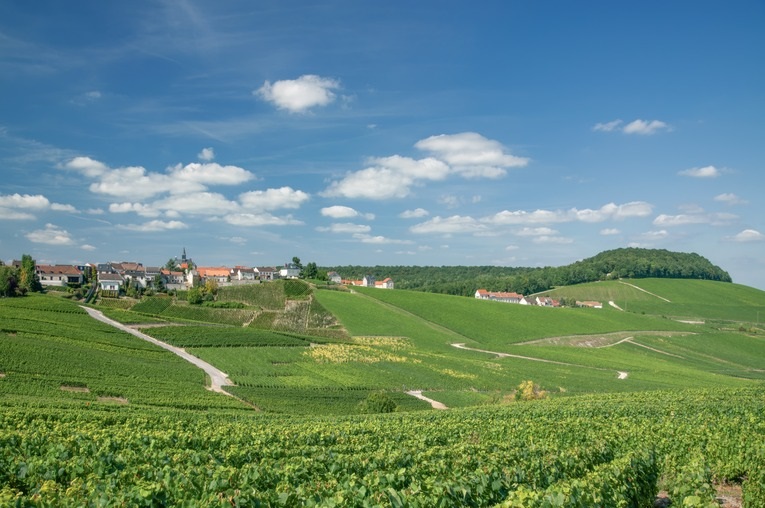
Grapes have been grown in the Champagne region since Roman Times. These vineyards were maintained by the church throughout the many waves of conquerors including the Franks, the Goths, the Burgunders, the Vandals, and the Huns. However, reliable production of ‘modern Champagne’ only became possible at the end of the 17th Century. As the first fermentation stalled owing to the cool temperature of the chalk cellars, the yeast would continuing consuming the residual sugars as it became reactivated by the warmer temperatures of spring and summer. Bottles would explode everywhere. Attempting to stop this peculiar phenomenon, the cellar master at the abbey of Hautvillers, Dom Perignon, noticed that this wine was actually quite pleasant. He sought out to source a sufficiently sturdy bottle that could withstand these pressures. And with the coal-fired bottle produced by an English glassworks, the modern Champagne was born. The Champagne region is at the Northernmost limit of vine cultivation, although with the effects of global warming we are seeing this change with England now taking the crown for the northernmost limit of vine cultivation, particularly with reference to producing sparkling wine. Extremities and fluctuations in temperature significantly affect the vineyards with the greatest risk being spring frosts. The region comprises three main vineyard areas: Cote des Blancs, Vallee de la Marne and Montagne de Reims. Spread over these three areas are 15,000 growers and 290 Champagne houses. Given the latitude of Champagne, the three main grape varieties of Chardonnay (giving freshness, acidity and citrus aromas, found most in the Cotes de Blancs), Pinot Noir (mostly in the northern Montage de Reims, contributing body, structure and red berry aromas) and Pinot Meunier (Vallee de la Marne, providing suppleness and fleshiness) are strained to reach full ripeness. Vineyards within these regions are graded by quality, with only 17 receiving the Grand Cru classification, and only 44 adjudged to be of Premier Cru quality. Of course, the wine from Champagne are further classified based on their composition and resultant style. Non-vintage, made from a multi-year blend of wines, is the most widely produced. With NV Champagnes, the grapes from one vintage will form the basis of the blend, with other so-called “reserve wines” allowing the Chef de Cave to produce a consistent house stye, vintage after vintage. This needs to be aged for a minimum of 18th months prior to release onto the market. Vintage wines are made from grapes grown in a single year and, although they represent a small percentage of wines produced in the region and are criminally unvalued, make some of the highest quality and most prestigious wines. A further host of classifications include those relating to the level of sugar in the final wine. Brut, with less than 12 grams of sugar per litre, is by far the most popular. Brut Natural or Brut Zero contains less than 3 grams, with Demi-Sec or Rich denoting a sugar content north of that found in Brut. Rose is another style whose production differs to that of other regions, where the wine maker has a choice between the saignee method, where the clear skins are left to macerate with the clear juice for a while or, unusually, red wine can be mixed with white to produce a salmon-flecked wine. Recently Disgorged (RD) denotes a Champagne that undergoes extended ageing prior to disgorgement before going out to market, allowing the wine to retain freshness. Luxury or Prestige Cuvees are usually the top wines produced by the estate and, as such, represent the heights to which Champagne can ascend. Blanc de Blanc, made exclusively from Chardonnay, and Blanc de Noirs, made from red grapes, cover the main Champagne classifications. While the region is known for the Grande Marques, such as Moet, Veuve Cliquot and Laurent Perrier, Champagne is awash with boutique producers, many of whom grower their own grapes. These producers, known as “grower Champagnes”, sit at odds with the Grande Marques who have various contract with grape growers, and own very few vineyards themselves.
![N.V. Louis Roederer Collection 246, Gift Pack (75 cl) - Bottle [308516700000600750]](https://du5d0xxkq463h.cloudfront.net/media/catalog/product/placeholder/default/In_bond.jpeg)
![2018 La Grande Dame x Simon Porte Jacquemus, Veuve Clicquot (75 cl) - Bottle [309683720180600750]](https://du5d0xxkq463h.cloudfront.net/media/catalog/product/cache/e748d881e54f2c9368fad2d1a1421cc2/3/0/3096837.jpg)
![2017 Louis Roederer Blanc de Blancs (75 cl) - Bottle [108250020170600750]](https://du5d0xxkq463h.cloudfront.net/media/catalog/product/cache/e748d881e54f2c9368fad2d1a1421cc2/1/0/1082500new.jpg)
![2017 Louis Roederer Brut Rose (75 cl) - Bottle [108253920170600750]](https://du5d0xxkq463h.cloudfront.net/media/catalog/product/cache/e748d881e54f2c9368fad2d1a1421cc2/1/0/1082539new.jpg)
![N.V. Collection 244 Brut, Champagne Louis Roederer (150 cl) - Magnum [279044400000301500]](https://du5d0xxkq463h.cloudfront.net/media/catalog/product/cache/e748d881e54f2c9368fad2d1a1421cc2/2/0/2085036.jpg)