


Back
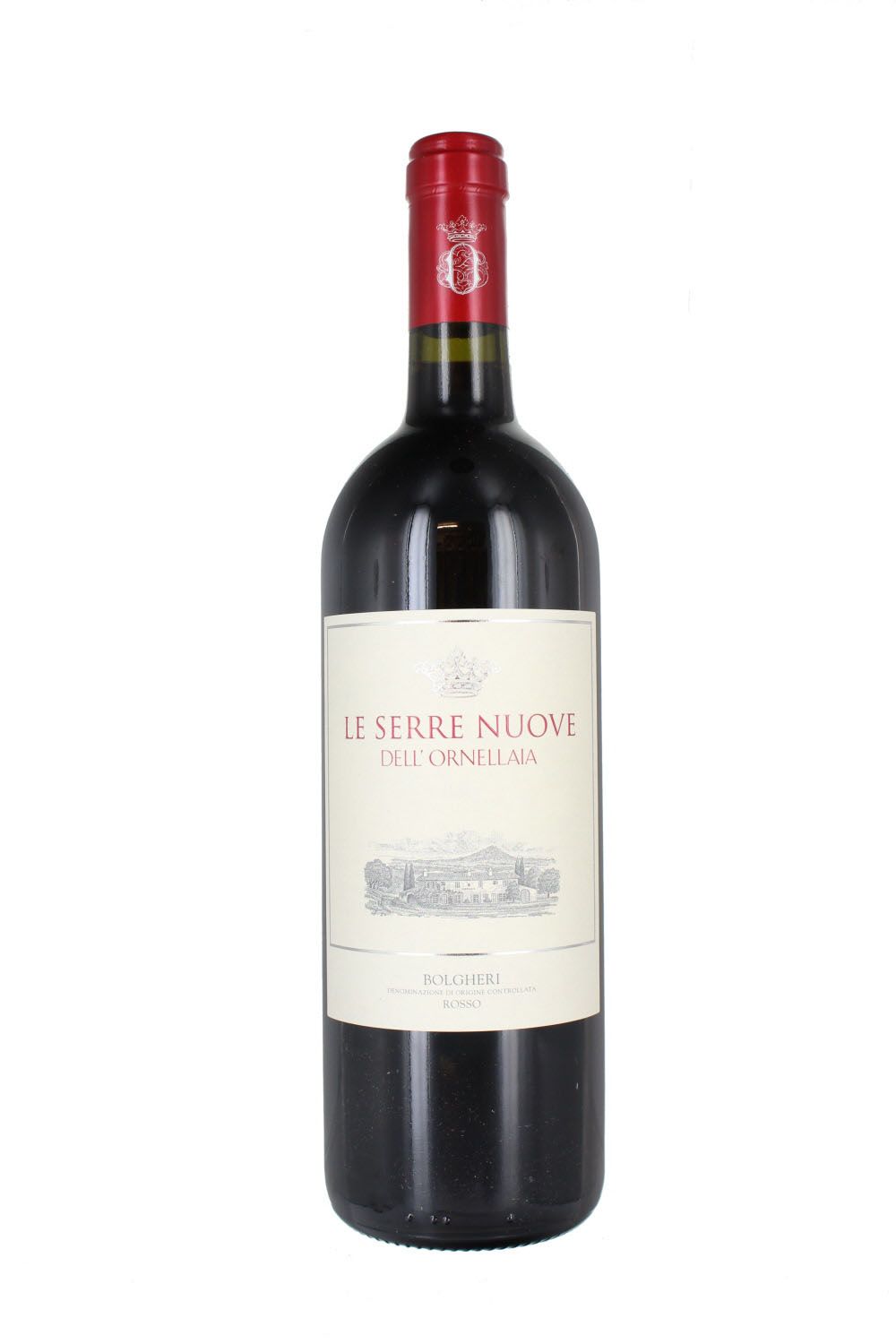
2022 Le Serre Nuove, Tenuta dell Ornellaia, Bolgheri, Tuscany
 Add to Wishlist
£130.00 1 x Magnum (150 cl)
Tasting notes
A powerful and expressive nose of black cherry, oak and spice. The palate is rich and polished with silky tannins and a lovely lift on the finish.
At a glance
producer
sub-region
Not available
region
country
grape variety
vintage
colour
abv
maturity
organic status

Reviews
The 2022 Le Volte dell’Ornellaia is a tasty Sangiovese-based blend. Crushed flowers, plum, cinnamon, leather and spice are front and center. Plump and inviting, with lovely forward fruit, Le Volte is a terrific choice for drinking now and o ver the next handful of years.
Antonio Galloni
The 2022 Le Serre Nuove dell’Ornellaia is everything a second wine should be. Open-knit and racy, the 2022 caresses the palate with succulent red fruit. Floral and spice notes with a kick of blood orange open the wine nicely on the mid-pala te and into the finish. Soft, silky tannins wrap it all together. This stylish red from Ornellaia is ready to go.
Antonio Galloni
The 2022 Le Serre Nuove dell’Ornellaia is everything a second wine should be. Open-knit and racy, the 2022 caresses the palate with succulent red fruit. Floral and spice notes with a kick of blood orange open the wine nicely on the mid-pala te and into the finish. Soft, silky tannins wrap it all together. This stylish red from Ornellaia is ready to go.
Antonio Galloni
Excellent, full of energy and grip, love the lift here. Love that here you feel these Bordeaux grapes have a reason for being, they are bringing their own character and intensity, and feel like you are in coastal Tuscany, with dried herbs, fennel spice, raspberry, just a lovely lovely wine. You'd be super happy to open this now, but you can keep it. Higher Merlot than usual in this, and yet the tannins are present, providing a channel for the fruit to go through. 30% new oak, held back for six months in bottle.
Jane Anson
Tuscany
Tuscany (Toscana in Italian) is only responsible for around 5% of Italian wine production, but it is by far the most famous region internationally and is dis-proportionally represented on wine lists around the globe. This is perhaps mostly a relic of the importance of the region, both culturally, economically and politically throughout the medieval and renaissance periods and the fact that this has led it to be a tourist destination of worldwide repute, helping cement awareness of the local wines. Its reputation has also been helped by the (relatively recent) abundance of truly fine wines made here. It is the most red region of any in the country with a whopping 87% of production being either red or rosato (double the national average) with most of its iconic wines being made wholly (or mostly) from Sangiovese, which covers 62% of the vineyard area. The viticultural history of the region dates back to the Etruscan Empire which ruled this part of Italy from the 8th Century BC until it was absorbed by Rome in the 3rd Century. The importance of Tuscany as a cultural and political centre was firmly established in the middle ages and Florence was a key centre for the trading of wine (and not just local wine). By the 14th Century, much of the production was white and often sweet, with the finest wine of the region made in San Gimignano. It is around this time that the acidic variety Vernacchia, still associated with this hilltop tourist trap, first appears by name. Chianti is also first mentioned around this time, but it was a white wine. Right up until the 1950’s, the region was dominated by a few huge estates, owned by the church or local merchant families that were farmed on a share-cropping basis. As this system collapsed after the Second World War, investment ceased and the vineyards fell into a state of disrepair. By the 1970’s, outside investment had begun as plots were bought up, but sadly the clones planted were often chosen for volume, not quality and whilst Chianti gained worldwide fame, the product could not be called a quality one. Throughout the 1970s, 1980s and into the 1990s, Tuscany saw an overhaul in almost all areas: the creation of new DOC and DOCGs, including their expansion and refinement; the planting of French varieties; outside investment in properties; and, a general increase in quality across the board. There are 41 DOCs and 11 DOCGs in Tuscany, many of which are insignificant and rarely used, with many producers preferring the IGT Toscana for wines not from the more recognisable areas. Those considered to be of greatest importance are: Chianti DOCG/Chianti Classico DOCG; Brunello di Montalcino DOCG / Rosso di Montalcino DOC; Vino Nobile di Montepulciano DOCG / Rosso di Montepulciano DOC; Morellino di Scansano DOCG; Bolgheri DOC / Bolgheri Sassicaia DOC; and, Vernaccia di San Gimignano DOCG.
![2009 Baffonero, Rocca di Frassinello, Maremma, Tuscany (75 cl) - Bottle [116898320090600750]](https://du5d0xxkq463h.cloudfront.net/media/catalog/product/placeholder/default/In_bond.jpeg)
![2022 Ornellaia, Tenuta dell'Ornellaia (75 cl) - Bottle [110202420220600750]](https://du5d0xxkq463h.cloudfront.net/media/catalog/product/cache/e748d881e54f2c9368fad2d1a1421cc2/1/1/1102024new.jpg)
![2022 Chianti Classico, Castello dei Rampolla (75 cl) - Bottle [110386120220600750]](https://du5d0xxkq463h.cloudfront.net/media/catalog/product/cache/e748d881e54f2c9368fad2d1a1421cc2/1/1/11038611.jpg)
![2022 Bakkanali Kab, Toscana IGT (75 cl) - Bottle [293203720220600750]](https://du5d0xxkq463h.cloudfront.net/media/catalog/product/cache/e748d881e54f2c9368fad2d1a1421cc2/2/9/2932037.jpg)
![2023 Bakkanali Rosa, Toscana IGT (75 cl) - Bottle [293203420230600750]](https://du5d0xxkq463h.cloudfront.net/media/catalog/product/cache/e748d881e54f2c9368fad2d1a1421cc2/2/9/2932034.jpg)
![2023 Canna Torta Bianco, Podere Le Ripi (75 cl) - Bottle [188561920230600750]](https://du5d0xxkq463h.cloudfront.net/media/catalog/product/cache/e748d881e54f2c9368fad2d1a1421cc2/1/8/1885619new.jpg)
![2019 Amore e Magia Brunello di Montalcino, Podere Le Ripi (75 cl) - Bottle [186691920190600750]](https://du5d0xxkq463h.cloudfront.net/media/catalog/product/cache/e748d881e54f2c9368fad2d1a1421cc2/1/8/1866919.jpg)
![2022 Bakkanali Rosso, Toscana Sangiovese IGT (75 cl) - Bottle [255622220220600750]](https://du5d0xxkq463h.cloudfront.net/media/catalog/product/cache/e748d881e54f2c9368fad2d1a1421cc2/2/5/2556222.jpg)
![2021 Liu, Castello dei Rampolla (75 cl) - Bottle [192372220210600750]](https://du5d0xxkq463h.cloudfront.net/media/catalog/product/cache/e748d881e54f2c9368fad2d1a1421cc2/1/9/1923722.jpg)